
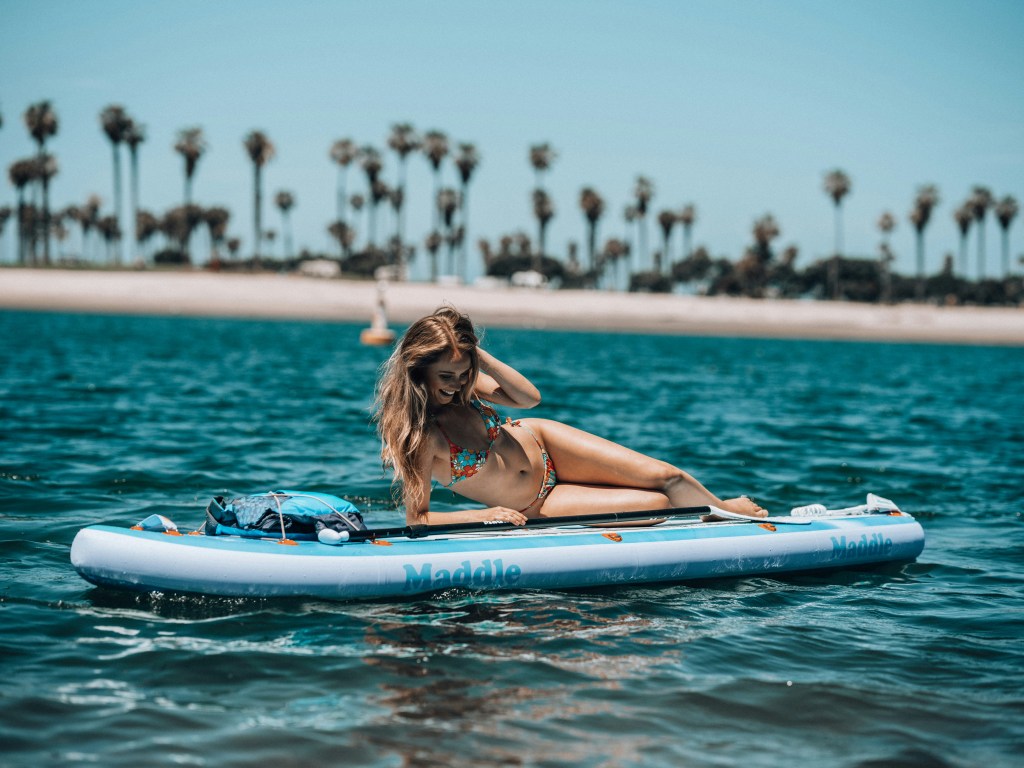
Paddleboarding is my therapy; sun on my skin, water beneath my board, and peace in every paddle stroke. But let’s be real: even the most serene paddleboarding sessions come with risks if you’re not prepared. So, whether you’re a beginner or seasoned pro, here are must-know paddleboarding safety tips to help you stay safe, confident, and carefree out on the water.
1. Always Have or Wear a PFD (Personal Flotation Device)
Even if you’re a strong swimmer, wearing a life jacket for paddleboarding is a non-negotiable. A Coast Guard-approved PFD keeps you afloat if you fall in and gives you time to recover. For a low-profile look, go for a belt-style life vest designed specifically for stand-up paddleboarding (SUP).
2. Use a Paddleboard Leash
Your leash keeps you connected to your board in case you fall. For flatwater, an ankle leash works fine. It helps you avoid getting tangled in underwater hazards, a key part of staying safe while paddleboarding.
3. Check the Weather and Water Conditions Before You Go
Never skip this step. Check wind speed, tides, water temperature, and weather forecasts before heading out. Offshore winds can sweep you away from the shoreline faster than you think. For optimal paddleboarding conditions, aim for low winds and calm water.
4. Dress for the Water, Not Just the Air
One of the top paddleboarding safety tips for beginners is to dress for immersion. That means choosing gear that works if you fall in. Even on hot days, water can be chilly, especially in spring and fall. Wear a wetsuit or moisture-wicking clothes that dry fast.
5. Protect Yourself from the Sun
Sun safety is water safety. The glare from the water can increase UV exposure, leading to sunburn and even dehydration. Use reef-safe sunscreen, wear a wide-brim hat or baseball cap, and bring sunglasses with a strap so they don’t fall in the water.
6. Tell Someone Your Paddleboarding Plan
If you’re heading out solo or on a remote route, let someone know your paddleboarding location and estimated return time. This simple habit is one of the easiest ways to ensure someone has your back if things go wrong.
7. Stay Hydrated and Bring Snacks
Yes, paddleboarding is relaxing, but it’s also a legit workout. Bring water and snacks, especially if you’re going out for more than an hour. Dehydration can sneak up fast, especially under the sun.
8. Watch Out for Boats and Other Watercraft
Stay visible and aware. Wear bright clothing and keep your head on a swivel when paddling in areas with other traffic. Avoid high-traffic boat lanes, and always yield to larger watercraft. Learning basic paddleboarding etiquette can help you avoid accidents.
Final Thoughts: Paddleboarding is Better When You’re Safe
At the end of the day, paddleboarding is more than a workout, it’s a vibe. By following these paddleboarding safety best practices, you can enjoy the water without the worry. So suit up, leash on, and paddle out like the confident water babe you are.

 PaddleBoard Girly